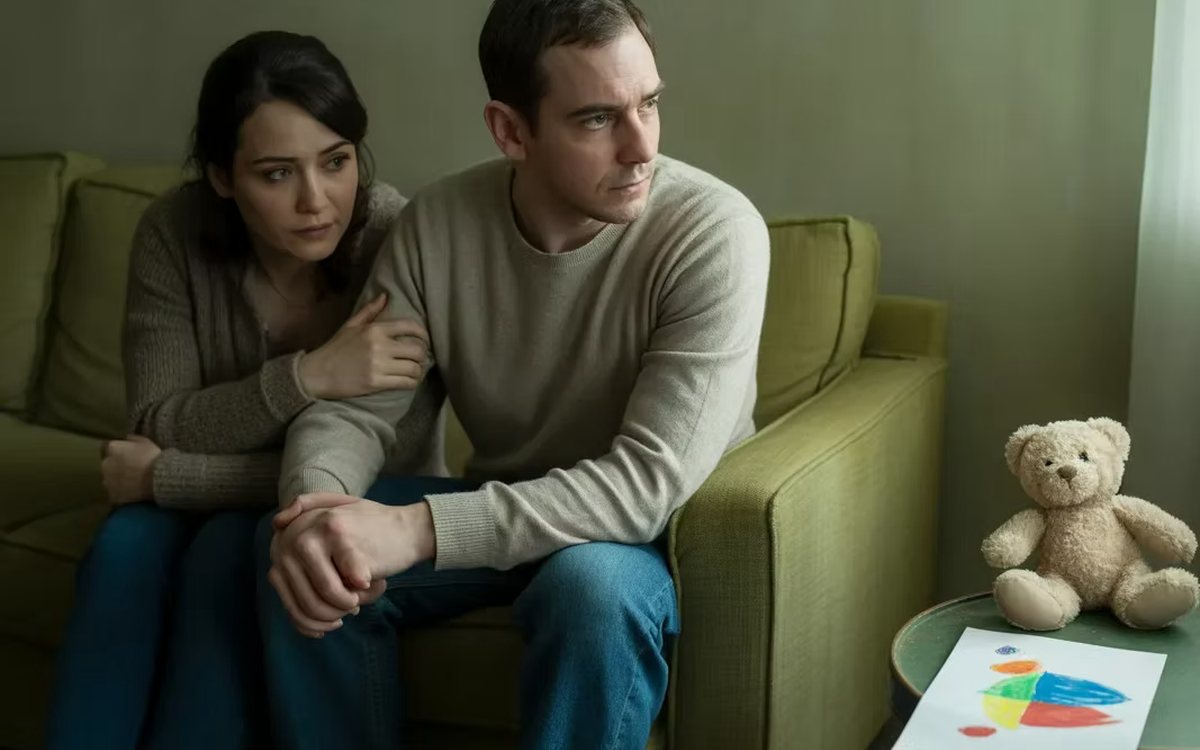
When war enters the relationship
Whether or not you have children, living as a couple in wartime upends your bearings: safety, sleep, work, libido, family roles, the way you communicate and raise children. This article answers a direct question: what challenges do couples face during a conflict, with and without children, and what can you do day to day to protect the relationship, without downplaying reality or feeling guilty.
In a context like Tel Aviv (alerts, shelters, uncertainty, call-ups, loved ones at the front), many couples swing between intense solidarity and explosive tension. The aim here is to give you simple bearings, practical tools and warning signs so you know when to seek help.
Why war (sometimes) weakens the couple bond
The nervous system switches to "survival mode"
In wartime, the brain prioritises survival: vigilance, anticipation, quick reactions. As a result we become more irritable, less patient, more controlling… or, on the contrary, more avoidant. The WHO points out that "almost all people affected by emergencies will experience psychological distress" (anxiety, sadness, irritability, sleep problems), which can improve over time, but some will develop more lasting disorders.
At population level, the WHO estimates that about 22% (1 in 5) of people who have lived through war or conflict in the past 10 years have a condition such as depression, anxiety, PTSD, bipolar disorder or schizophrenia. War, like other traumatic experiences, can act as a trigger, leading vulnerable people to decompensate or develop psychiatric disorders.
The couple becomes both a refuge… and a place to unload
When the outside world is unpredictable, we turn to our partner for reassurance. But our partner is also the one who absorbs:
- chronic fatigue (broken nights, alerts, rumination),
- mental overload (logistics, children, relatives, news),
- different "survival strategies" (one wants to talk, the other to stay quiet; one wants to stay informed, the other to switch off),
- old wounds reopened (abandonment, betrayal, injustice, insecurity).
Challenges by situation: without children, with children, or apart
Couples without children: emotional loneliness, heavy decisions, family pressure
Without children, war does not "simplify" couple life: it often shifts the tension elsewhere.
- Deciding (or not) to have a child in an unstable context: diverging wishes can turn into ultimatums ("now or never" / "not in these conditions").
- Comparison ("others are suffering more, so we have no right to feel bad"), which stops people from asking for help.
- The place of families of origin (anxious parents, demands, conflicts of loyalty, financial help or dependence).
- Hyper-connection to the news: doomscrolling, social media, disturbing videos, leading to rising stress and repetitive arguments.
The common risk: a couple that looks "functional" but is emotionally disconnected (each one coping alone).
Couples with children: co-parenting under strain, guilt, exhaustion
With children, war adds a layer of responsibility: staying strong for them, sometimes with no one to take over. The most frequent points of friction:
- Disagreements about parenting in the face of danger (reassure or tell the truth, expose or protect).
- Managing routines (sleep, school, activities) when reality disrupts everything.
- Sharing the load: one parent on "autopilot", the other at maximum anxiety.
- The children's emotional reactions (anger, regression, restlessness), which wear the couple down.
Couples apart (call-ups, reservists, travel): distance, fear and misunderstandings
When one partner is called up, on reserve duty (miluim) or away from home, the relationship can become strained around:
- managing fear (fear of losing the other, fear of being alone),
- the daily load carried by the one who stays,
- communication styles (brief messages versus a need for details),
- jealousy and control (an attempt to reduce uncertainty).
In these situations, the couple needs a communication framework (frequency, topics, limits) more than "perfect" emotional availability.
Typical wartime arguments… and what they reveal
In therapy, many couples describe recurring conflicts that look alike. Naming them helps you get out of the "we argue over nothing" trap. Often, the argument is about something else.
- "You never listen to me": a need for safety, recognition, co-regulation.
- "You're overreacting / you're downplaying it": two different survival strategies (hypervigilance or numbing).
- "You're always on your phone": an attempt to control uncertainty through information.
- "I do everything": overload, exhaustion, a sense of unfairness.
- "You don't want me any more": stress, fatigue, anxiety, sometimes trauma symptoms.
A useful marker: under threat, the problem is not only what is said, but the physical state in which it is said (tension, escalation, overwhelm).
A concrete plan to protect your relationship day to day
1) Agree on "what you can control" (and what you can't)
A couple grows stronger when it stops negotiating the non-negotiable (the war) and focuses on small choices:
- our routines (meals, sleep, exercise),
- our family priorities (children, relatives, work),
- the way we talk to each other,
- our limits (news, social media, alcohol, conflict).
2) Set up a "brief" and a "debrief" (10 to 15 minutes)
Two small rituals are often enough to reduce arguments:
- Brief: "What's planned today? What's stressing you? What do you need from me?"
- Debrief: "What was hard? What did we handle well? What do we adjust tomorrow?"
In wartime, predictability in the relationship becomes a powerful calming factor.
3) Put limits on the news (without falling into denial)
A simple suggestion: 2 news windows a day (morning and late afternoon), and "no news" in bed. If one of you needs to stay closely informed, they can then give a 2-minute factual summary, without videos.
4) Use a "time-out" when the discussion flares up
When the body overheats, we no longer argue: we attack, defend or run. Some popular work on couples therapy recommends a break of about 20 minutes to let physical arousal come down before resuming the conversation more calmly.
The rule: you don't disappear. You say: "I'm taking a break, I'll be back at such-and-such time."
One technique for letting off this pressure is to write down what you feel when the emotion overflows, without necessarily sending the message. It releases tension and lets anger subside, without acting on impulse. You can then reread what you wrote, adjust the tone and words, and resume the conversation more constructively.
5) Protect tenderness (even if your sex life is on hold)
Desire often drops under stress: it is not a "lack of love", it is a body on alert. A realistic goal: keep up gestures of attachment (holding hands, a hug, a look, gratitude) without turning every moment of closeness into an expectation of sex.
6) Clarify roles and the mental load
In a crisis, a couple holds up better with an explicit division of tasks, even an imperfect one. Make a short list:
- who handles what (children, shopping, paperwork, relatives),
- what can be "good enough" (not perfect),
- what is non-negotiable (safety, sleep, health).
When there are children: talking about the war, reassuring without lying
What children perceive (even when nothing is said)
Children read the atmosphere: they hear the sirens, pick up on tone of voice, silences, agitation, the messages you receive. Possible reactions: regression, sleep problems, irritability, stomach aches, aggression, clinginess.
Several recent Israeli studies on the impact of war on children show a significant increase in psychological difficulties among young people exposed to prolonged threat. Research conducted after the events of October 7, 2023 points to a rise in anxiety, post-traumatic stress symptoms, sleep problems, irritability and behavioural regression, particularly in young children. Some studies estimate that nearly half of exposed children show symptoms consistent with post-traumatic stress disorder.
Israeli researchers also stress that these children are not always facing a single traumatic event, but rather what they describe as "continuous traumatic stress", linked to repeated exposure to sirens, security alerts and constant uncertainty.
The research nevertheless highlights several important protective factors, including parents' presence and emotional support, keeping daily routines (school, activities), and giving children the chance to express their emotions and talk about their fears in a safe setting.
What Israeli psychologists recommend for children in wartime
These recommendations come notably from Israeli research, child psychiatrists and programmes used in schools.
1. Restore predictability. The first step is to recreate a stable routine: regular hours, normal activities, school as soon as possible. A break in routine is a major source of distress for young children.
2. Name emotions. Psychologists encourage putting emotions into words, normalising fear and not minimising it. For example: "It's normal to be scared when there are sirens."
3. Give age-appropriate information. Explain the situation simply, answer questions, avoid anxiety-provoking details or violent images.
4. Limit exposure to the news. Children exposed to images of war develop more symptoms: anxiety, nightmares, hypervigilance.
5. Support a sense of relational safety. Major protective factors: parents' presence, physical contact, emotional availability.
6. Use play and physical activity. Widely used in Israel: symbolic play, drawing, sport, breathing. It allows trauma to be processed indirectly.
Trauma, PTSD and the couple: understanding the shock wave (without blaming yourself)
When trauma enters the relationship
After a traumatic event (or prolonged exposure), you may see flashbacks, nightmares, avoidance, hypervigilance, irritability and emotional numbness. In a couple, this often shows up as distance, arguments, loss of intimacy and a feeling of walking on eggshells.
What the research says (some figures)
A meta-analysis (31 studies) found medium-sized associations between PTSD symptoms and "marital discord" (true correlation ρ ≈ 0.38), and between PTSD and physical (ρ ≈ 0.42) and psychological aggression (ρ ≈ 0.36).
In other words: when post-traumatic stress rises, the relationship is statistically more likely to deteriorate. It is not inevitable, but supporting and caring for the bond is part of prevention.
Individual or couples therapy: both can help
A systematic review and meta-analysis (2022) indicates that individual and couples therapies can both reduce PTSD symptoms, with small but significant improvements in relationship functioning as well.
Domestic violence: an alarm signal, not a "communication problem"
Stress does not excuse violence. If the relationship includes threats, humiliation, control, hitting, sexual coercion or daily fear, safety comes first.
Public health figures
The WHO estimates that "almost one third (27%)" of women aged 15 to 49 who have been in a relationship report having experienced physical and/or sexual violence from an intimate partner.
UN Women also points out that violence in the private sphere can end in murder: in 2024, about 50,000 women and girls were reportedly killed by an intimate partner or family member, an average of about 137 a day.
What to do in danger (in Tel Aviv / in Israel)
- Immediate emergency: call emergency services (police 100, Magen David Adom 101).
- Domestic violence: the Ministry of Welfare helpline, 118, is available 24/7.
- Emotional support: for soldiers and their families, SOS Soldats offers a 24/7 listening line in French at 03-350 5050. ERAN (emotional first aid) answers 24/7 at 1201.
If you are reading this from another country, the idea is the same: don't stay alone, and contact local emergency services and support organisations.
Getting help: therapy in Tel Aviv (or remotely) in wartime
When the couple can no longer "repair" after arguments, when one of you is falling apart, or when co-parenting is deteriorating, outside help can save months of suffering.
Support available with Carinne Leibovici
- Couples therapy: to restore communication, reduce escalation, and work on trust, sexuality and co-parenting.
- Family therapy: helpful when children "carry" the tension, or when roles at home fall apart.
- Individual therapy: anxiety, rumination, exhaustion, trauma symptoms, difficult decisions.
- Online sessions: when travelling is difficult, or if one partner is abroad.
Approaches used (depending on your needs)
- CBT: concrete tools against anxiety, intrusive thoughts, avoidance, panic attacks and repetitive arguments.
- Psychodynamic: understanding what the war reawakens (fear of abandonment, past trauma, shame, guilt) and transforming relationship patterns.
- Systemic: working on interaction loops (pursue/withdraw, criticise/defend), co-parenting, and boundaries with families of origin.
Carinne Leibovici is a French clinical psychologist based in Tel Aviv, with more than 15 years of experience, who works in English, Hebrew and French.
Practical guide: recognise, act, seek help
| Common situation | Typical signs | Action "today" | When to seek help? |
|---|---|---|---|
| Arguments that blow up fast | Shouting, blame, threats to leave, unable to calm down | A structured time-out and a 10-minute debrief in the evening | If it lasts more than 2 to 3 weeks or gets worse |
| Emotional disconnection | Silence, avoidance, "roommates", loss of tenderness | Daily ritual: 1 question and 1 gesture of affection | If one of you feels alone, unwanted or resigned |
| Children more difficult | Regression, fears, sleep problems, anger | Routine and screen-free time together | If symptoms get in the way of school or daily life |
| Trauma symptoms | Nightmares, hypervigilance, avoidance, irritability | Limit triggers and ask for a professional opinion | As soon as the suffering becomes overwhelming |
| Violence or fear | Control, threats, hitting, coercion, terror | Get to safety, contact emergency services and helplines | Immediately (this is not just a conflict) |
FAQ: couples in wartime
We've been arguing constantly since the war started. Is that "normal"?
Yes, it is common, but it shouldn't be dismissed. Under threat, stress increases irritability, lowers tolerance and hardens positions (we want to "be right" to feel safe). What matters is whether you manage to repair after an argument: apologies, calming down, reconnecting. If arguments become daily, humiliating, or you can no longer calm down, couples therapy can help you rebuild a sense of safety in the relationship and give you concrete tools.
How do we protect the relationship when one of us is a reservist or often away?
The key is to replace the expectation of "ideal" availability with a clear agreement: how often to message, topics to avoid while the other is on duty, and a set time to connect when possible. A couple holds up better with short but regular rituals (even 5 minutes) than with long, rare conversations. It can also help to plan a "decompression time" on return (rest, sleep) before tackling heavy subjects. If distance creates jealousy, control or extreme anxiety, support can stabilise the bond.
What if we disagree about parenting during the war?
War can sharpen differences in sensitivity between parents: some want to protect and reassure, others prefer to prepare and explain more. Rather than trying to be right, the main goal is to give the child a consistent, reassuring framework.
Agree on a few essential points:
- What to tell the child: true, simple, age-appropriate information, without unnecessary detail or frightening images. Above all, the child needs to know what is happening and what the adults are doing to protect them.
- What to do during an alert: agree in advance on the procedure, each person's role and the way to the shelter. Children are often reassured when they know exactly what to do.
- How to handle screens and news: limit exposure to images and rolling news channels, which can increase anxiety. Children need to be informed, not immersed in the news.
Much parental tension comes from a conflict between "reassuring" and "preparing". The two approaches are not incompatible: one parent can focus more on logistics and routines (schedules, school, organisation), while the other takes more of a role in time together and talking (play, listening, putting emotions into words).
Finally, if the child shows a marked and lasting deterioration (sleep problems, intense anxiety, refusing school, frequent outbursts, withdrawal), it can help to see a professional to support them through this period.
I've lost all desire since the war. Does it mean I don't love my partner any more?
Not necessarily. Stress, fear, fatigue and hypervigilance can make desire drop: the body prioritises survival. In many couples, tenderness can remain a bridge back, without pressure to perform sexually. Try to protect moments of non-sexual closeness (a hug, a massage, a hot shower, simple words) and reduce aggravating factors (late-night news, lack of sleep, alcohol). If the lack of desire comes with disgust, dissociation or trauma symptoms, individual or couples support is appropriate.
When should you see a psychologist in wartime?
- You are no longer recovering (sleep, panic attacks, irritability).
- The relationship has become a major source of suffering (arguments, withdrawal, threats to separate).
- Your children have changed lastingly (fears, aggression, regression).
- You suspect post-traumatic stress.
- There is violence or fear in the relationship.
The WHO notes that many people feel psychological distress in an emergency, and that a minority develop more lasting disorders: seeking help early can prevent symptoms from taking hold.
What now?
If you recognise your situation in these wartime challenges, with or without children, you don't have to go through it alone. You can consider couples therapy, family therapy or individual support, in the Tel Aviv office or online. To get started, get in touch.
SOS Soldats, a free 24/7 support line in French, is available to soldiers, reservists and worried relatives at 03-350 5050, to help prevent post-traumatic stress.